Poverty

Fundraising for the right to play

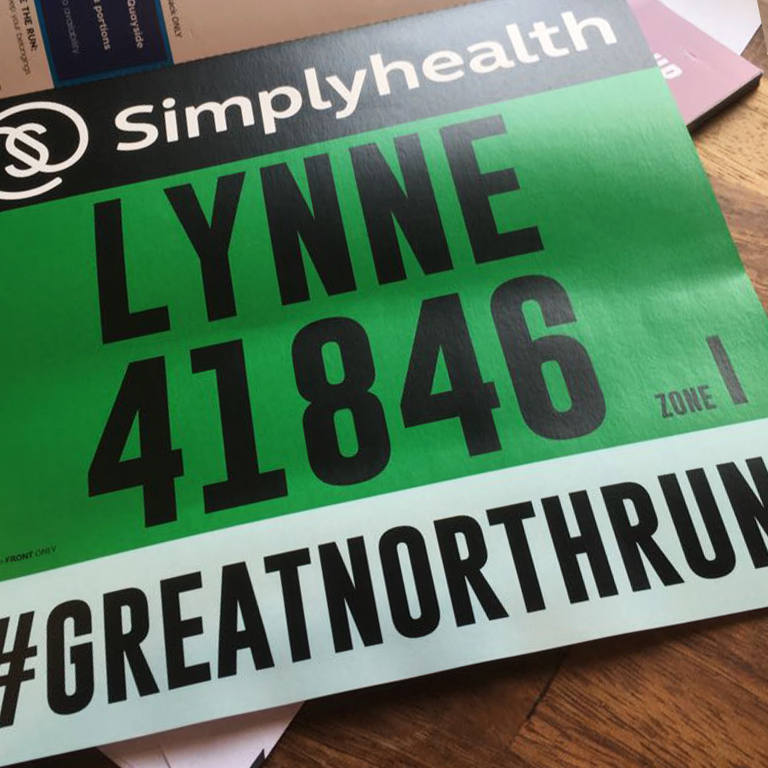
Mother of two, Lynne Ashbridge is taking on the famous Great North Run this September, raising awareness of and fundraising for our work. Not a runner and, in her own words, partial to the 'occasional' chocolate brazil nut, this half marathon will be no mean feat. Hear from Lynne about why she's putting herself through it, her training journey so far and her fundraising goal.

My name is Lynne Ashbridge. I'm 62 years old and live in the North East of England with my husband Steve. We have two grown up daughters, Beth who is based in New York and Jo in London. I like to think that I'm fit for my age as I still play squash 2-3 times a week with Steve (and they are tough games not just a gentle jog around the court!)

I've always watched and supported the Great North Run - it's an institution born in the North East and is very dear to our Geordie hearts and minds.

This year Jo asked if I'd run the GNR with her for AzuKo. Beth soon joined us in solidarity, and is running a marathon distance over 6 races throughout New York City. Like us, she'll finish her running endeavours on Sunday 9 September. All three of us will cross the finish line together (hopefully).

(Photo: J. Brown)
(Photo: J. Brown)

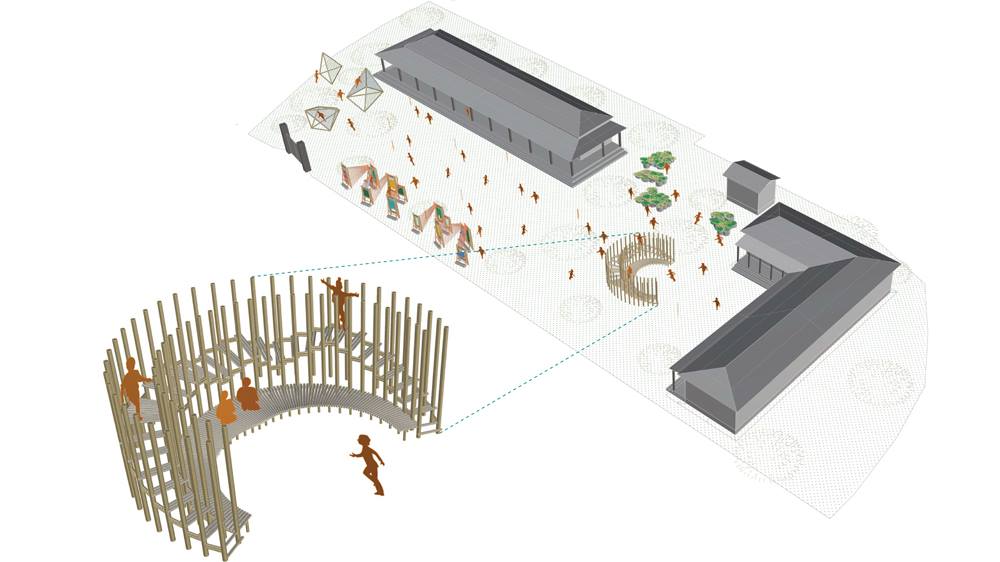
JAAGO playspace design
Although the thought of running a half marathon (13.1 miles) is a daunting task - I’m definitely not a runner and never have been - I wanted to support AzuKo and help the charity design and build a playground for an impoverished community in rural Bangladesh. It makes me very proud the see the great work Jo is doing through AzuKo.

... Back to the beginning of this journey, which will finish in about 3 weeks:

Steve took me out running and in truth I barely ran for more than 200m. My chest was burning; I could hardly breathe. But not to be defeated I continued to go for small runs, which were always difficult. Eventually I participated in a 5km parkrun. I remember thinking I would never make it to the finish line. I did, and that gave me encouragement to go along the next week and try again. 

I have been running now for 9 months and I don’t know how it has happened as it has crept up on me slowly but I am now running for 90 mins (who would have thought that possible in the early days?) I have lost about 2 stone in weight and I feel fit and healthy.

As a team my daughters and I are aiming to raise £3,000 of which every penny will most definitely be put to good use in the design and construction of JAAGO playspace. When children get a good start in life it can be truly life changing and the world will be a better place for it. 

Donating money or giving your time to raise money may seem like a small thing to do however if we all join together then collectively it can become much bigger, and we can eradicate inequality.

What is getting me through this gruelling training is remembering how blessed I am and have been throughout my life. If I can help AzuKo improve lives then running 13.1 miles is a small task to undertake.

Please sponsor us and spread the word amongst friends and family.

We assure you that every penny raised will be put to the very best of use. The playspace will improve learning, emotional development and wellbeing, and most of all the children will be given the opportunity to just have fun. What can be more important than that?

Wish me luck on 9 September. Hopefully I'm on track with my training - I'll certainly give it my best shot. If I can't run the entire route I will crawl across the finish line. That’s my promise to all our supporters!

Follow Lynne’s training journey and cheer her on via Facebook. Lynne is currently at 60% of her fundraising goal. Show your support for her incredible effort.

Sponsor Lynne

Dignity in design

Today is World Habitat Day. A day to reflect on the state of our villages, towns and cities, and ultimately the realities associated with inadequate shelter throughout the world.

But what does this really mean and how can we as individuals make a difference to the 1.6 billion who are without access to this basic human right?

You may not see yourself as living in luxury, but let’s consider the alternative:

  • When your alarm sounds in the morning, you (gracefully?) tumble out of bed and turn on the lights.

In Jorgen Babur Mart, an urban slum in northwest Bangladesh more than five individuals reside in single room dwellings no bigger than 12.5sqm. Living, working and sleeping within those four walls. No privacy, limited comfort. Barely half of the entire country (an estimated 166 million people) have access to electricity and this in unreliable at best. Without electricity a working day is bound by the dawn to dusk cycle, reducing efficiency and productivity - key to escaping the poverty trap.

(Bangladesh Bureau of Statistics / Central Intelligence Agency)

  • You make your way to the kitchen and fill up the kettle.

Access to clean, safe water is certainly not a given in many parts of the world. In fact one in ten (748 million) don’t have it. A staggering 1,400 children die every day due to water related diseases.

(WaterAid)

  • You open the fridge, grab a pint of milk and an array of goodies for your signature dish – the English fry-up!

Without refrigeration shopping for essentials becomes a daily chore, taking precious time away from an already jam-packed schedule. All these luxuries which we take for granted... central heating (we don’t have to search for firewood), access to water (we don’t have to walk for miles to fill a jerrycan to wash our clothes), food deliveries (we don’t depend on a good crop to ensure we have enough rice on the table)... mean we can dedicate out time to other pursuits.

(Women’s Refugee Commission)

  • With the stove lit, it’ll only take a few minutes until you’re sat down, tucking into your breakfast.

Reliance on inefficient cookstoves and poor ventilation leads to chronic and acute health concerns - child pneumonia, lung cancer, pulmonary disease, heart disease, cataracts... In Lesotho alone, nearly 2,000 people die every year from household air pollution. This should simply not be the case.

(Global Alliance for Clean Cookstoves)

  • A quick run to the toilet and you’ll be out the door and on your way to work.

Sanitation and everything that this conjures in the mind is often a taboo subject - 2.4 billion are living without access to any type of improved facility, please don’t blush. It’s hard to imagine 2 million dying every year from diarrhoeal diseases, most of them less than the age of 5, but it’s true.

(World Health Organization)

  • Did I say you were just about to leave? Hold on, there are a few more considerations...

You may not live in a malaria-risk zone, but this disease affects nearly half the world’s population. Without improved housing measures, mosquito nets, insecticide, testing and medical intervention, 627,000 die every year. Malaria is both preventable and treatable

(Malaria No More UK)

  • Apart from the odd snow day, do you ever give a thought to extreme weather events?

The poorest section of society is commonly the most vulnerable to the effects of natural disasters (rising water levels, river bed erosion, environmental degradation, the spread of infectious disease, building / infrastructure damage, disruption to livelihoods, civil conflicts...) Many of these, if not all, are exacerbated by poor housing conditions and lack of access to basic services and infrastructure.

(Intergovernmental Panel on Climate Change / UN-Habitat)

  • At least your voice is heard!

Democratic elections, thorough census procedures and public consultation are just some of the systems in place to ensure your rights and protection. However the reality is too many people live without secure land tenure and too many are without identity papers, which mean they are deliberately left out of official surveys and maps. They are denied access to systems such as piped water supplies or sewerage, to services such as household waste collections, local policing, schooling and healthcare. Without such recognition one cannot open a bank account, obtain insurance or vote.

(International Institute for Environment and Development)

  • A place to call home.

We have also assumed have we not, that at the very least people have a roof over their head. I’m writing to you from Mumbai, the commercial capital of India. A city bursting at the seams with an ever growing population. Over the past few decades there has been an international focus on the city’s informal settlements; a drive to create a ‘slum-free’ environment. But how can this possibly be achieved if there is a refusal to acknowledge those at the very bottom of the economic ladder? Pavement dwellers reside under simple tarpaulin sheets, occupying a 2 - 3m stretch of sidewalk, at the mercy of ongoing cruelty, daily threat of eviction and the painful reality of a life without recognition. Enumeration - a simple but powerful tool.

(Shack Slum Dwellers International)

Perhaps you’d now consider yourself as living in luxury? You shouldn't. 

Access to adequate shelter in all its facets should not be a luxury, afforded only to those who live and reside in developed regions. The world today is not an equitable place. It is our responsibility both as individuals and as a collective intelligence to effect positive change.

How can you help? How can you make any inroads into the enormity of these issues?

For starters you can make your mark. Today I’d encourage you to sign the petition to the UN to make sustainable cities and human settlements a global priority.

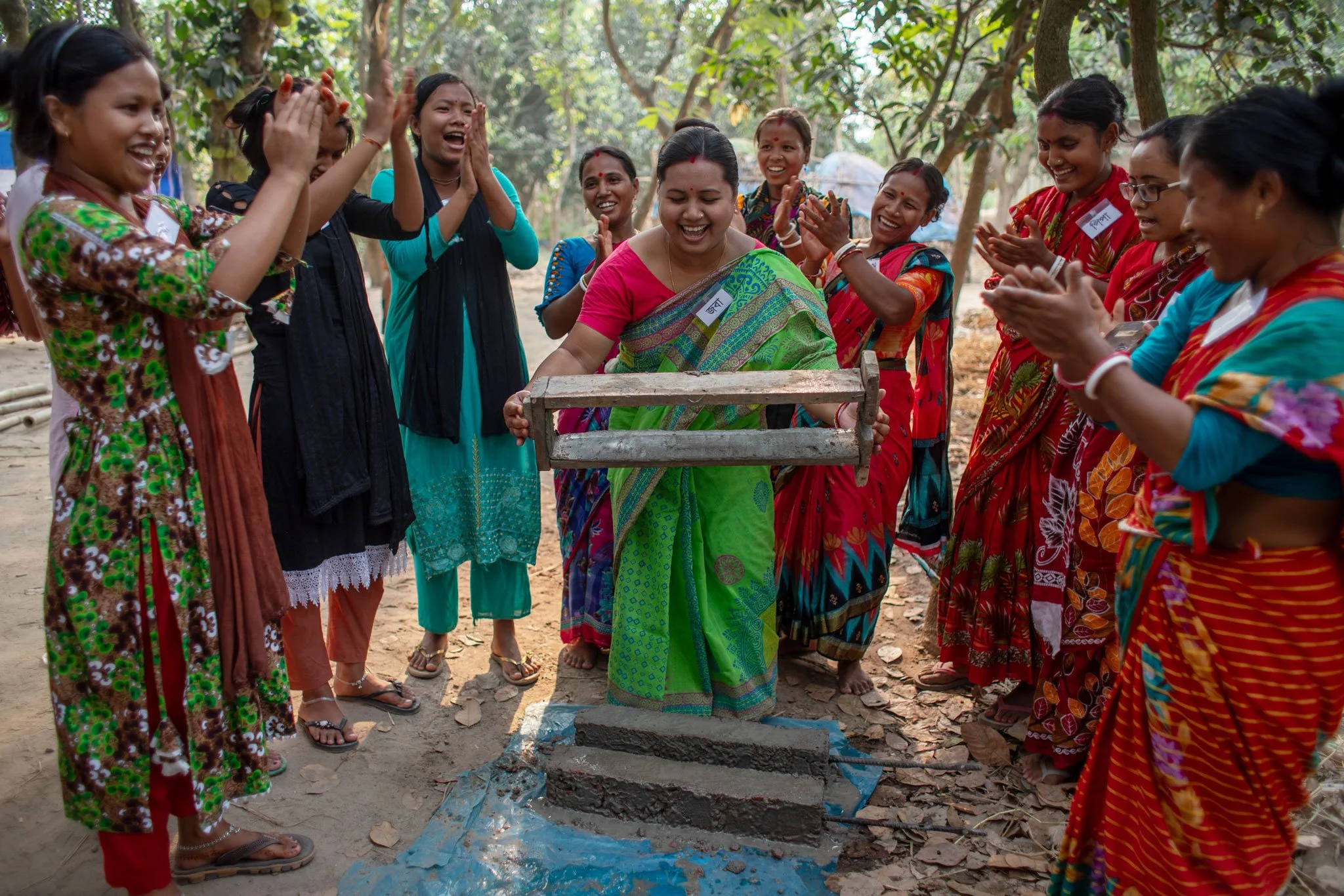
Secondly, AzuKo believes that housing equality is much more than simply provision of units, systems and services. It is about dignity - empowering communities to positively impact upon their own environments.

So, on this global day of reflection, join us in our campaign to raise awareness of our ethos ‘dignity in design’. We are hosting an eBay for Charity Challenge over the next eight weeks as part of the #GivingTuesday movement. We’re asking people to give differently over the holiday season and consider recycling, reuse and redistribution. We’re asking you to think of those without access to adequate shelter and reflect upon the elements in our lives which we take for granted.

(Image: AzuKo)

(Image: AzuKo)

What difference can you make? Well, you could support an organisation that works to improve lives through a dignified design process. Mahatma Gandhi said, “be the change that you wish to see in the world” - now imagine the impact we could make if we all embodied this belief.

Join us.


Author: J. Ashbridge

A statistical nightmare

Some days statistics weigh heavy on my heart. The scale and complexity of such concrete data leaves me feeling dizzy. It’s difficult to know which avenue to pursue or where our research efforts should lie. Take a breath.

One statistic in particular has driven many of our discussions:

The world urban population is expected to increase by 84% by 2050, from 3.4 billion in 2009 to 6.3 billion in 2050.
— UN / Dept of Economic and Social Affairs

It is a nod to all those other facts and figures with which we are bombarded. For the first time in history we live in a world where the number of those living in urban areas surpasses the rural. The urban growth is concentrated in less developed regions... the number of slum dwellers continues to increase.

This combination of natural population growth and urbanisation poses huge challenges. Is it something to fear? Should urbanisation be discouraged or is it a key building block of sustainable development? What are the implications for our cities and our citizens?

AzuKo operates within the realm of international development, holding strong the belief that there is a real need for architectural analysis. A humane critique.

In the face of adversity we see ingenuity.

So, over the next year we will be examining environments under enormous pressure - urban, high-density, low-income areas. We will focus on what it means to achieve a sense of place in settings on the frontline. How do individuals, families, units and communities cope under such strain and how do they come together to create genius loci, that distinctive atmosphere which elevates a simple street?

We have much to learn.


Author: J. Ashbridge