Materiality

Keeping cool shouldn't be a privilege

We’re feeling the heat. The Met Office has issued a rare ‘red: extreme heat’ warning for the UK, as temperatures rise towards 38°C. And we're far from alone – France, Spain and Italy are under the same red alerts, with dangerous heat reaching corners of Europe not built for it.

Many of us can take the edge off. We run the cold tap and fill a glass. We switch on a fan, if the electricity bill isn't a worry. We step into a local library where the air is cooler.

But that comfort has never been shared equally. There may well be people on your own street who can't afford to keep their home cool, or an elderly neighbour facing the heat alone.

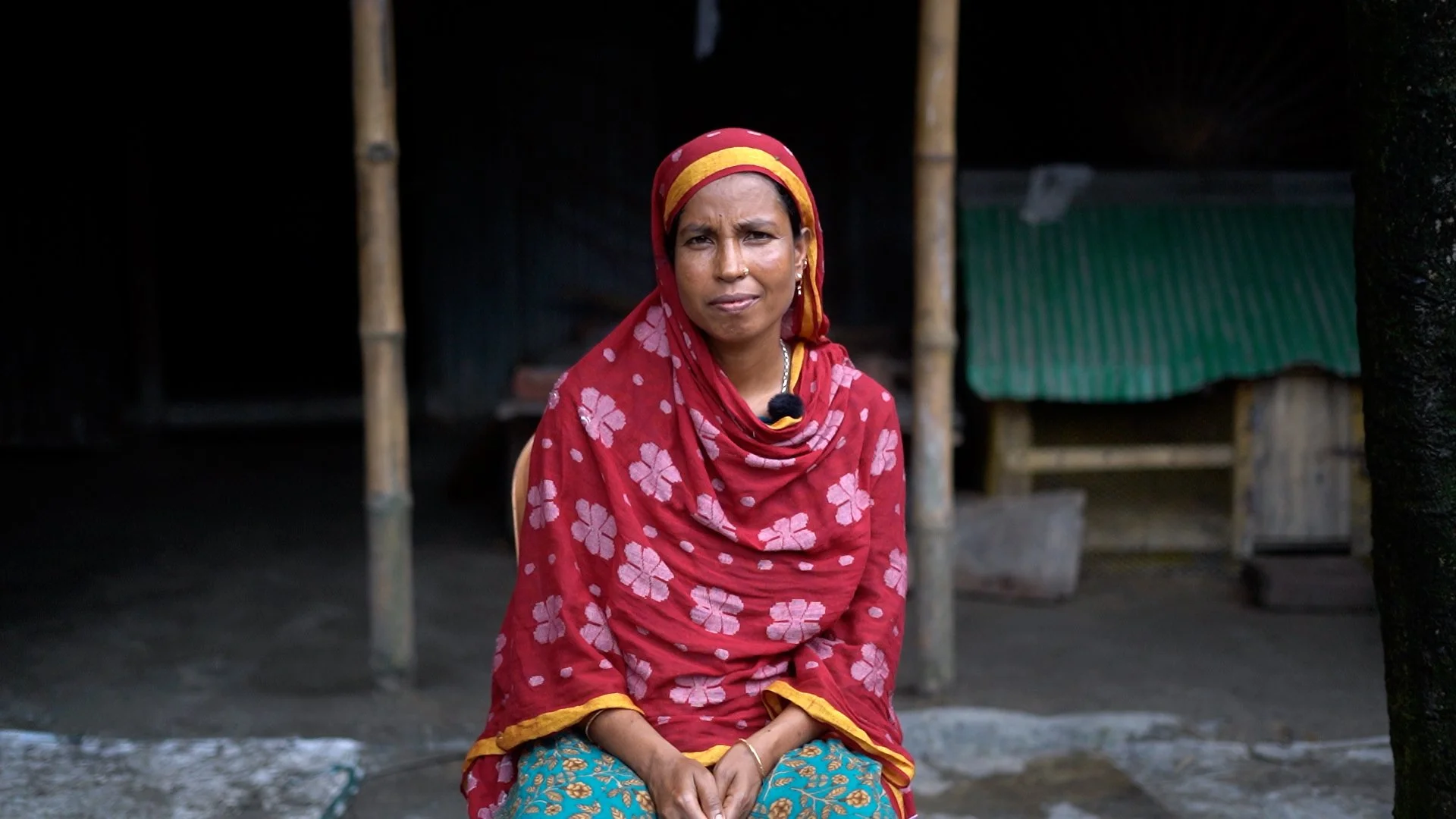
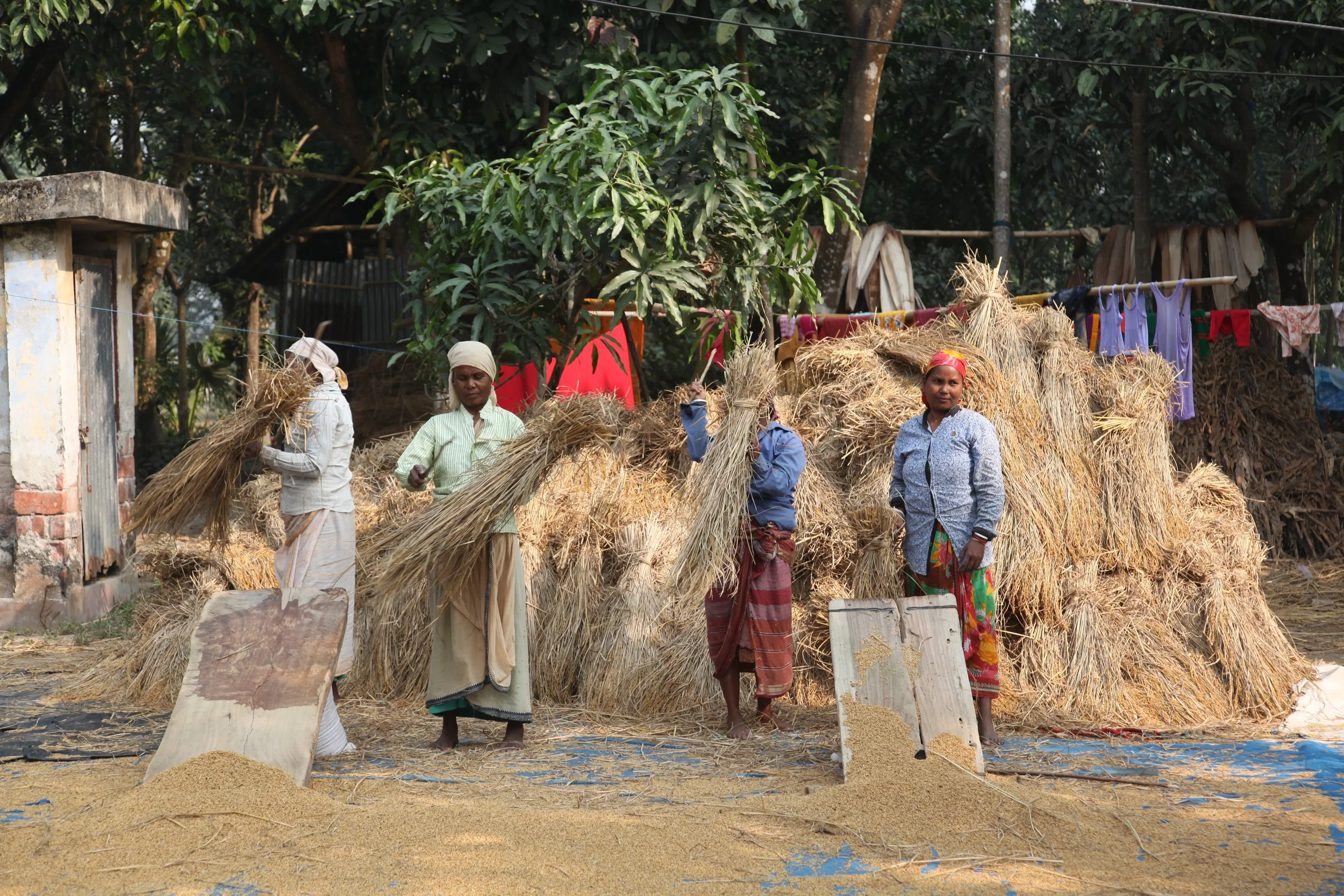
And the women and families we work with in rural Bangladesh face it with few options. There's often no piped water to the house. A fan, and the electricity to run it, can be out of reach. Nowhere nearby offers a cooler place to retreat to. The heat remains after long days in the fields and caring for family. Rest is rarely on the table.
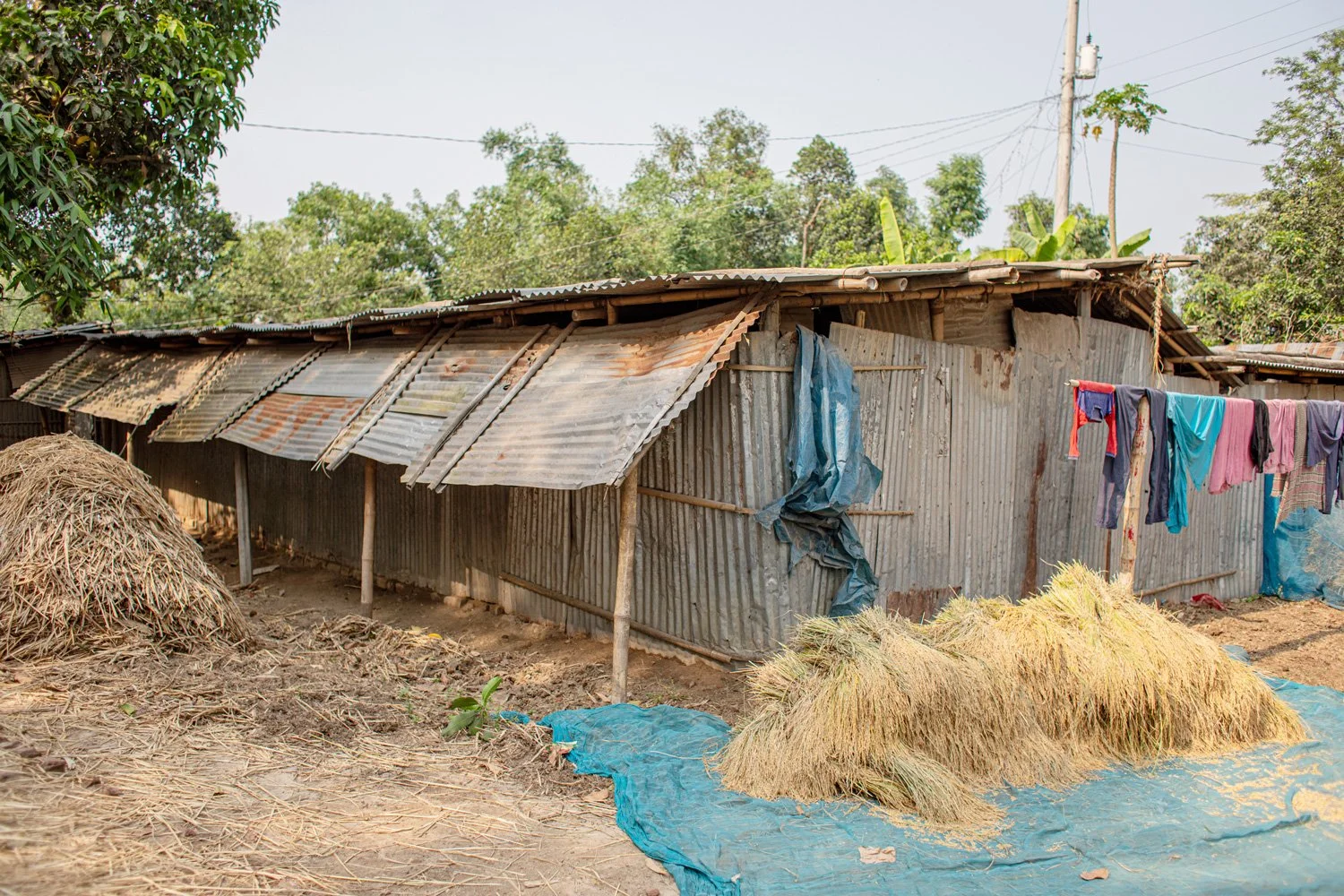
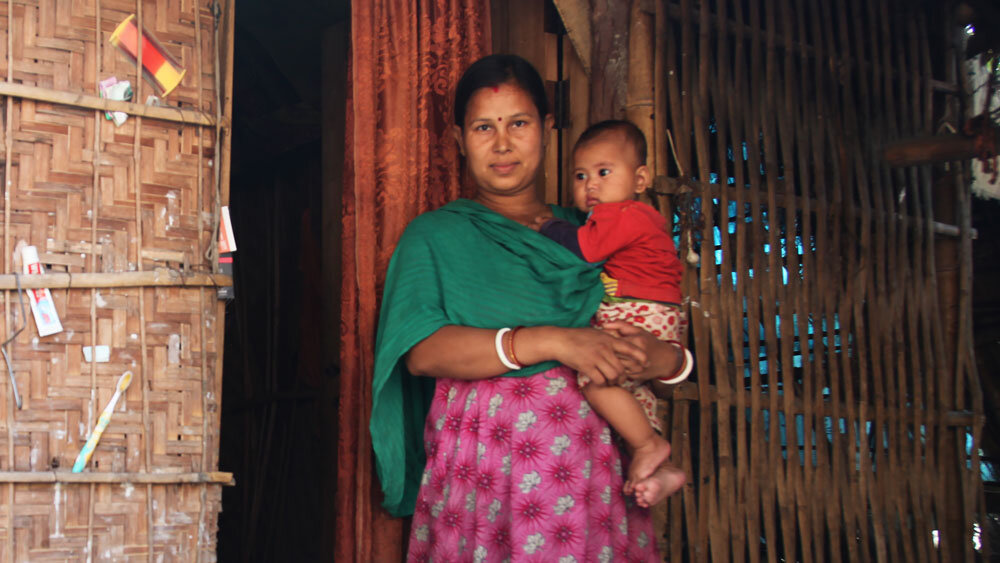
Corrugated iron sheet house, rural Bangladesh

And it's no longer a passing season. Bangladesh now ranks second in the world for exposure to extreme temperatures, and since 1980 the ‘feels like’ temperature has risen by 4.5°C. In the summer of 2025, close to 60 million people across Bangladesh endured life-threatening heat. The toll on health is real: cases of diarrhoea and respiratory diseases double, and women are among the most likely to suffer heat exhaustion and heat stroke.

In extreme heat, poorly built homes feel like ovens. But women’s work never stops. It impacts their health, sleep and wellbeing. They have no choice but to endure it.
— Apu (Nirapod Bangladesh Songstha)

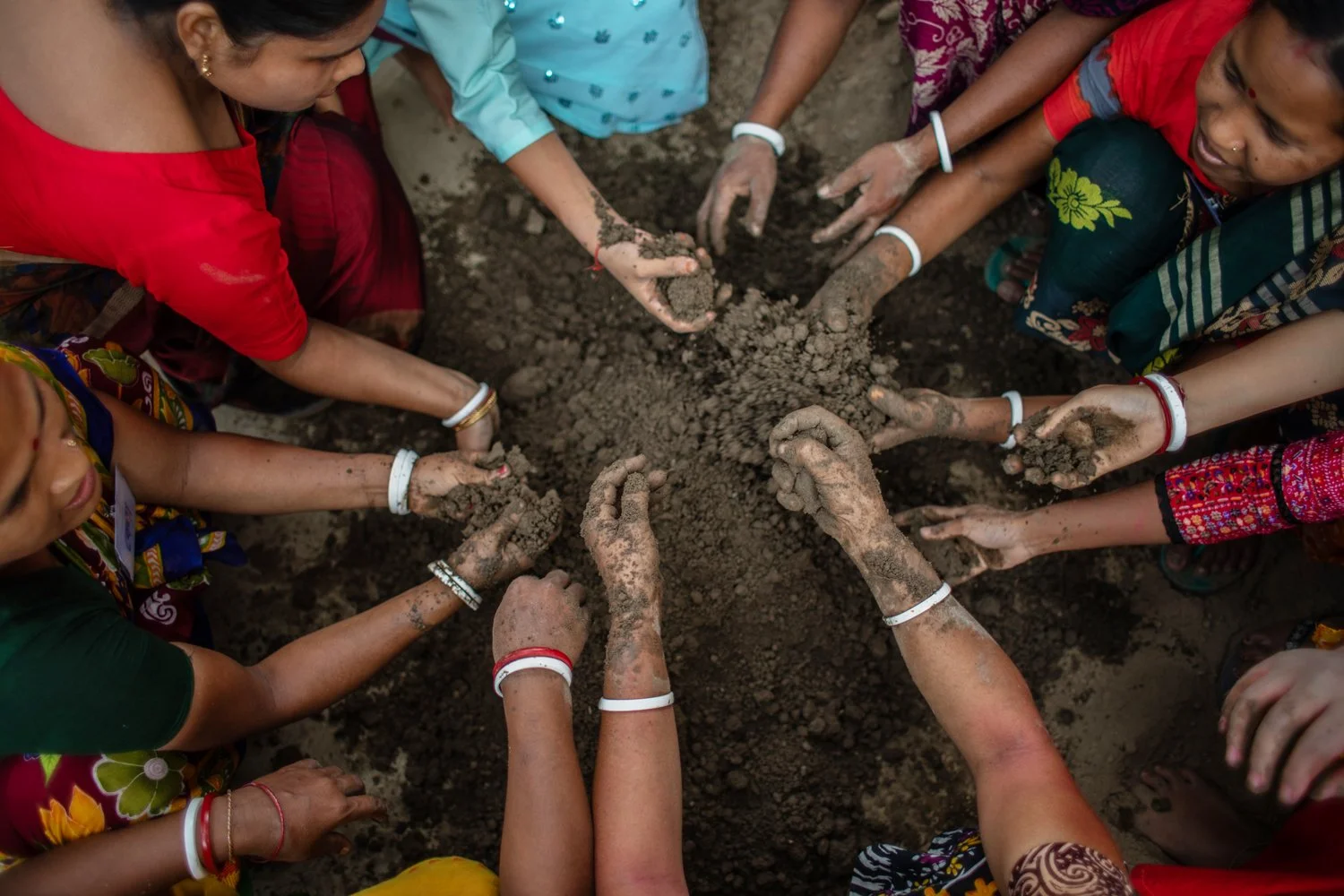
This is where the home itself can help. Much of AzuKo’s work pairs traditional building methods with practical upgrades. Vernacular* architecture works with the climate – for example, thick earth walls act as thermal mass absorbing heat during the day to keep interiors cool. They then release that stored warmth slowly once the air cools at night. As nights themselves grow warmer, a home that starts the evening cooler matters all the more. But those same earthen walls are vulnerable. Heavy rain, humidity and flooding wear them down, and families lose precious time to constant repairs.

The fix doesn’t have to be costly. Simple additives and stabilisers (often materials that can be found in the village) coupled with good design principles, help earth walls become more water resilient and longer lasting. This means less maintenance, less money spent, and more time and energy to rise above poverty.

A good house is cool and airy in summer, warm in winter and protected from storms. The whole family can live together safely and healthily. Only in such a house can a family live with dignity.
— Runa (northwest Bangladesh)
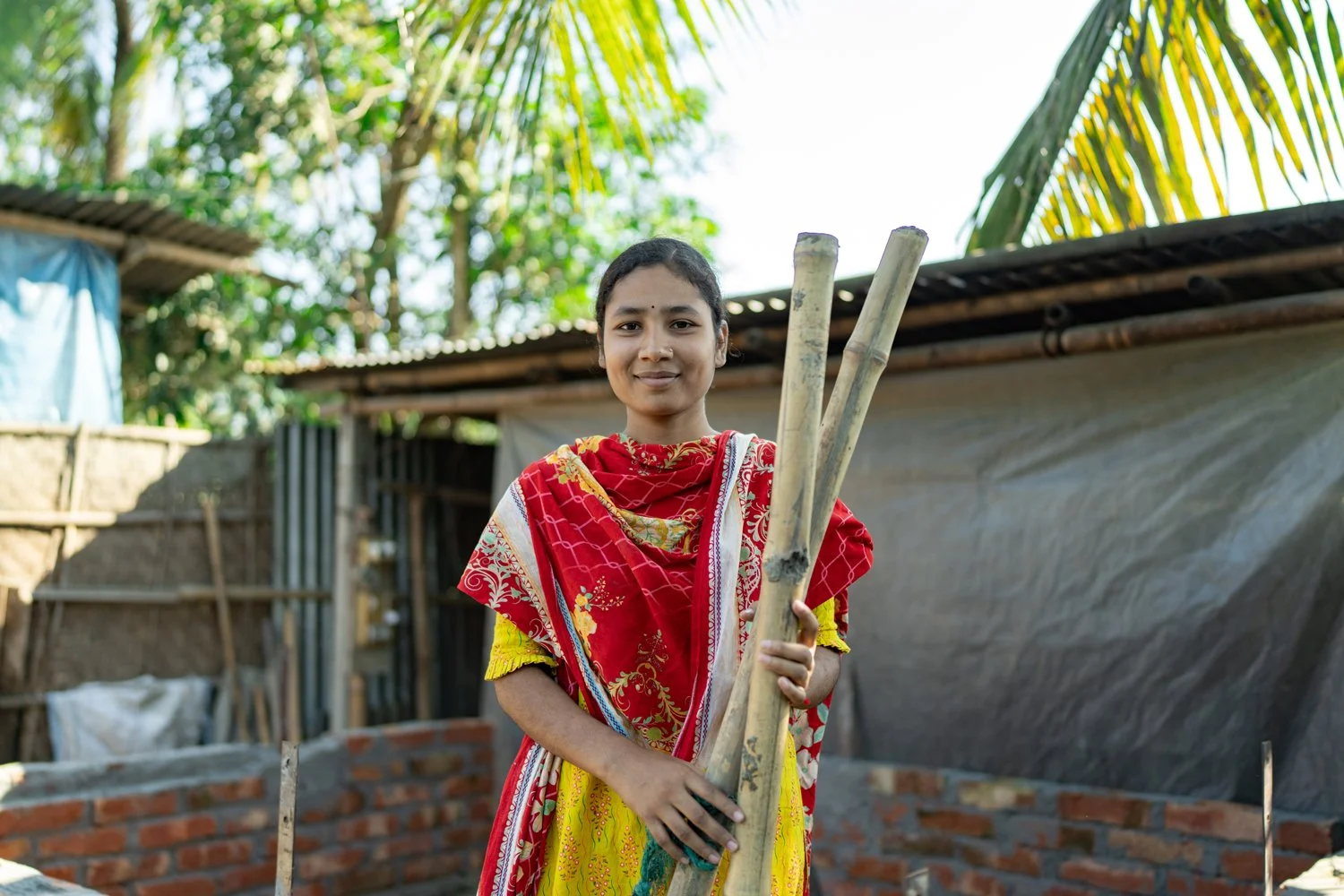
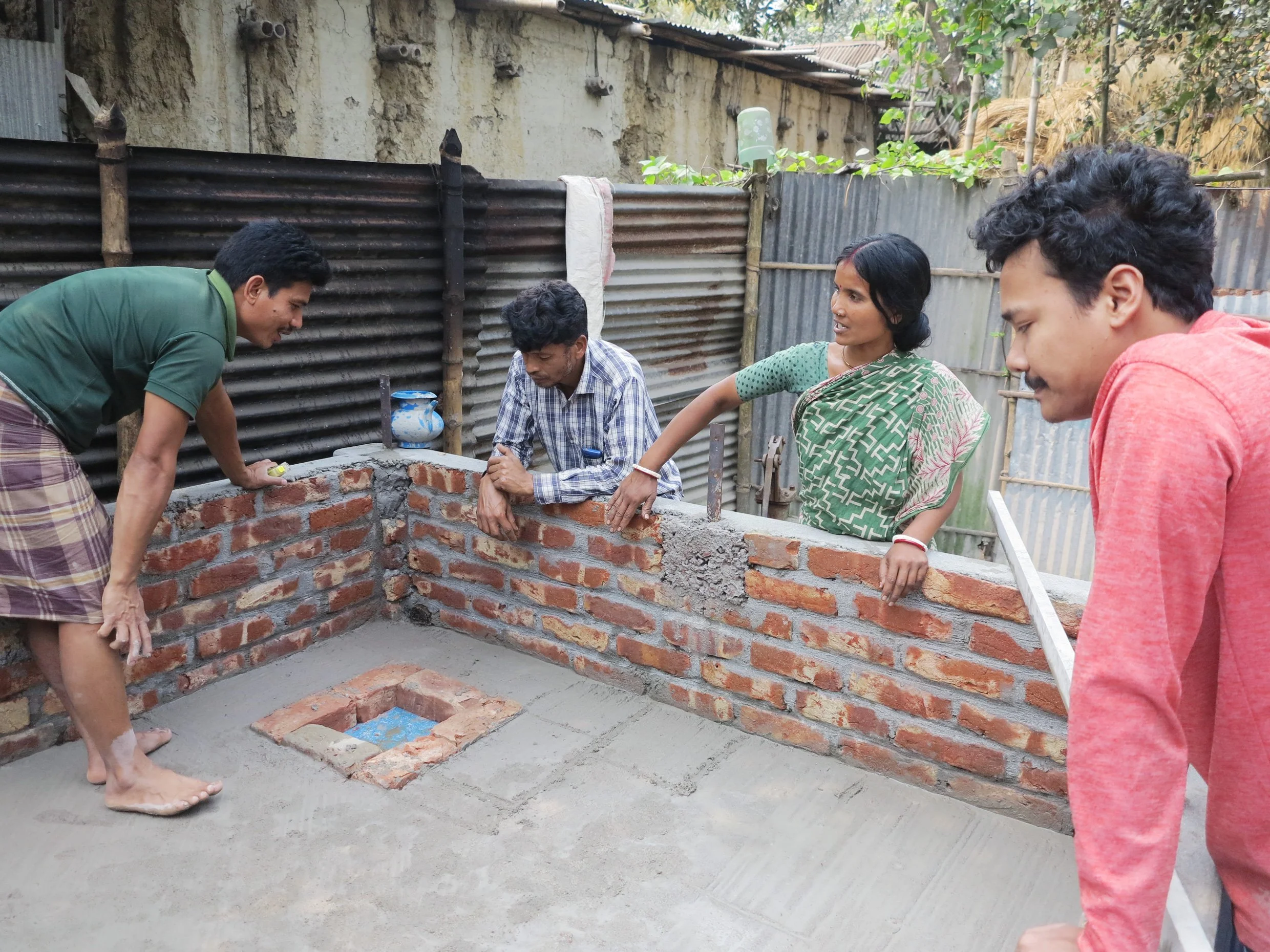
Woman holding bamboo, ready to build

The heat will come again next year, and the year after. The question is who gets to meet it from somewhere safe?

With your support, a woman in Bangladesh can build a home that holds the worst of it at bay – and gives her family the chance to look beyond simply surviving the summer.

Give today, and help build that home.


* Vernacular architecture is building rooted in a particular place and culture: made from local materials, shaped by techniques passed down over generations, and designed to work with the climate rather than against it. It's the practical knowledge of communities, not formally trained architects.

If you know someone who might be at risk, there are things you can do.

In the UK, your local council can offer advice if you're concerned about a friend, neighbour or family member who needs extra support. The Government's Beat the heat guidance and the NHS pages on heat exhaustion and heatstroke explain how to spot the warning signs and help someone stay safe.

In Bangladesh, the national Guideline on heat-related illness and UNICEF's technical note on protecting children from heat stress set out practical steps to recognise and respond to heat-related illness.
Ponchomi's story – building for safety

Ponchomi previously lived in a mud house. It was a one-room dwelling with thick walls made of a simple mixture of earth and water. Monsoon rains and floods eroded her home, so she had to constantly repair it. She often checked for snakes which like to burrow in the warm earth – a neighbour had died from such a bite. Her outbuilding was barely standing; the bamboo having rotted from rising damp and termite attack.

She dreamed of a house where she could feel safe with her children, a building that would withstand the elements. As a day labourer, her husband didn’t earn enough money to buy the bricks they needed, so they were about to borrow money from a loan shark.

Ponchomi heard about our ‘build for safety’ workshops, which offered an alternative and joined the training. We returned to see what difference it has made. Her family now live in a secure bamboo-frame house. The posts are raised above the damp earth on kaatla (pad foundations), the material is treated to resist termites, cross bracing reinforces the structure and stops it from twisting during storms and seismic activity, the corrugated iron sheet roof is securely tied back into the structure and steel bolts strengthen the primary building joints.

My house is much stronger now. It will last longer. These are small improvements but they make a big difference.
— Ponchomi

She invited us in for tea and proudly showed us all the improvements they’ve made. They only borrowed a small sum, and they’ve already paid it back. She’s now dreaming of an extension; a second room for when her children grow up. She feels confident she’ll again be able to use the techniques she learned.

Ponchomi is happy to share her skills. She’s now an advocate in her village for what can be achieved with bamboo, which is often seen as a ‘poor man’s’ material.

Help us train more women to build for safety in Bangladesh. Donate to our training programme.

Visit our project page for more information.

Author: J. Ashbridge

Human-centred design in China

Reflections from China by architect, Philippa Battye.

When AzuKo invited me to join their team in China to research community-led projects and present findings in a public showcase - I didn't think twice. I had a romantic vision of the rural and remote.

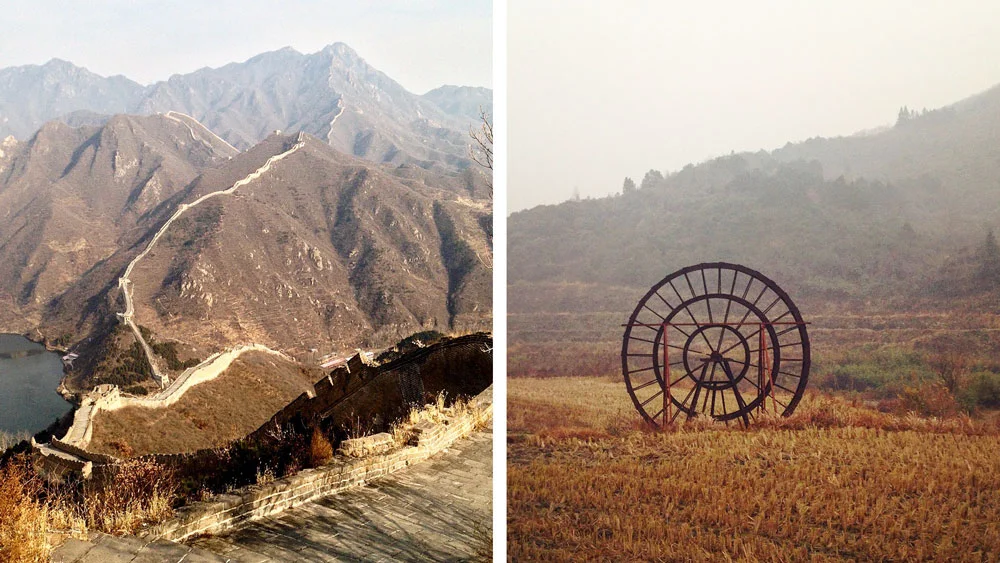
(Photo: P Battye)

(Photo: P Battye)

But the nerves soon set in. It wasn't the prospect of China itself, it was the task at hand - I would need to talk to people, lots of people and likely many who speak little English. I don't speak Mandarin. I would need to question, dig, unearth and investigate.

Now, three weeks in, I have returned to Shenzhen my base camp and relative home. I have spent this time pursuing architects who adopt a community centred approach to their work, with a particular focus on villages (rural and urban). I have spoken with designers in Shenzhen, Hong Kong and Beijing, of Chinese, Taiwanese, English, Irish and French origin. The task I was most apprehensive about - talking to people - has been the most rewarding. Each conversation has given me a greater understanding of what it's like to work in China, and what community-led means in this context.

(Photo: P Battye)

(Photo: P Battye)

My interviewees are hugely passionate about what they do, often subverting the normal routes to building in favour of less economically focused and more human-centred approaches to design. I have learnt how projects are initiated and conceived, where funding is sourced, how communities are engaged and at what stages. I have listened to their motivations, ambitions, and what matters to them as architects operating in this country. Nearly all had a story of frustration to tell.

(Photo: P Battye)

(Photo: P Battye)

I have discussed bathhouses, schools, community kitchens, museums, activity centres, housing and libraries. With each project the context, design intent and process is unique.

What they all share is an ambition to improve the lives of the beneficiaries they serve. A desire to help create and maintain socially and economically sustainable communities.

After connecting with these design leaders, I began a journey into the relative unknown, visiting projects in far flung places. Never before have I had to plan such complicated logistics under such time constraints, or frustratingly been so at the mercy of others.

I leave my hostel in Beijing at 5am and it is bitterly cold. Five hours on the bullet train and I arrive in the city of Xinyang, Henan province. I am greeted by the only two people at the station, brandishing a sign with 'Philippa Battye' - a first for me although I think I would be hard to miss! With my translator Ms LuLu and local governor Mr Zhang we drive two hours to Xihe village, an old cereals and oil trading centre and granary in the 50's. The road reduces from vast empty motorways to single lanes weaving through smaller settlements until we hit an unmarked road leading to the village. Three years ago no roads reached Xihe, it was only in and out on foot.

(Photo: P Battye)

(Photo: P Battye)

The young, who as part of the poverty alleviation scheme set up by Xi Jinping China's President, have returned to Xihe for the promise of a better life. Most now run profitable tourism based businesses back in their birthplace. They have returned to their rural heritage, with a positive outlook.

My next stop - Angdong village...

China feels like a country on the move, with purpose and in constant evolution. The view from my train carriage is always a marvel. Imposing infrastructure such as giant concrete columns march through the landscape waiting to be decked out with new high speed rails, and clusters of 60+ storey towers loom over the farmers below. This infrastructure will contribute to an already mind boggling rail network, which is run with unbelievable efficiency - in my 42 hours spent on trains and 11 hours of bus travel so far, not one has been a minute late.

It is in the parks or around lakes where the pace slows down, and people seem most content. Every morning the older generation practice thai chi; the parks are full of people walking, jogging and stretching together. In Beijing locals break the icy lakes to take a dip and people cluster to play 'keep me ups' with what looks little a giant shuttlecock. In the evenings music blares as large groups of women exercise with square (plaza) dancing.

(Photo: P Battye)

(Photo: P Battye)

There is a real sense of community within the city, and an everyday enviable sense of togetherness played out in public space.

It's the home straight... once reunited with my comrade Jo we will attempt to turn this investigative work into something publicly engaging. The types of projects we are examining, while often small in scale, can have a profound and significant impact on the lives of communities.

We believe these empathic approaches to design should be shared and celebrated.

Read about the learnings and showcase in Shenzhen.


Author: P. Battye