
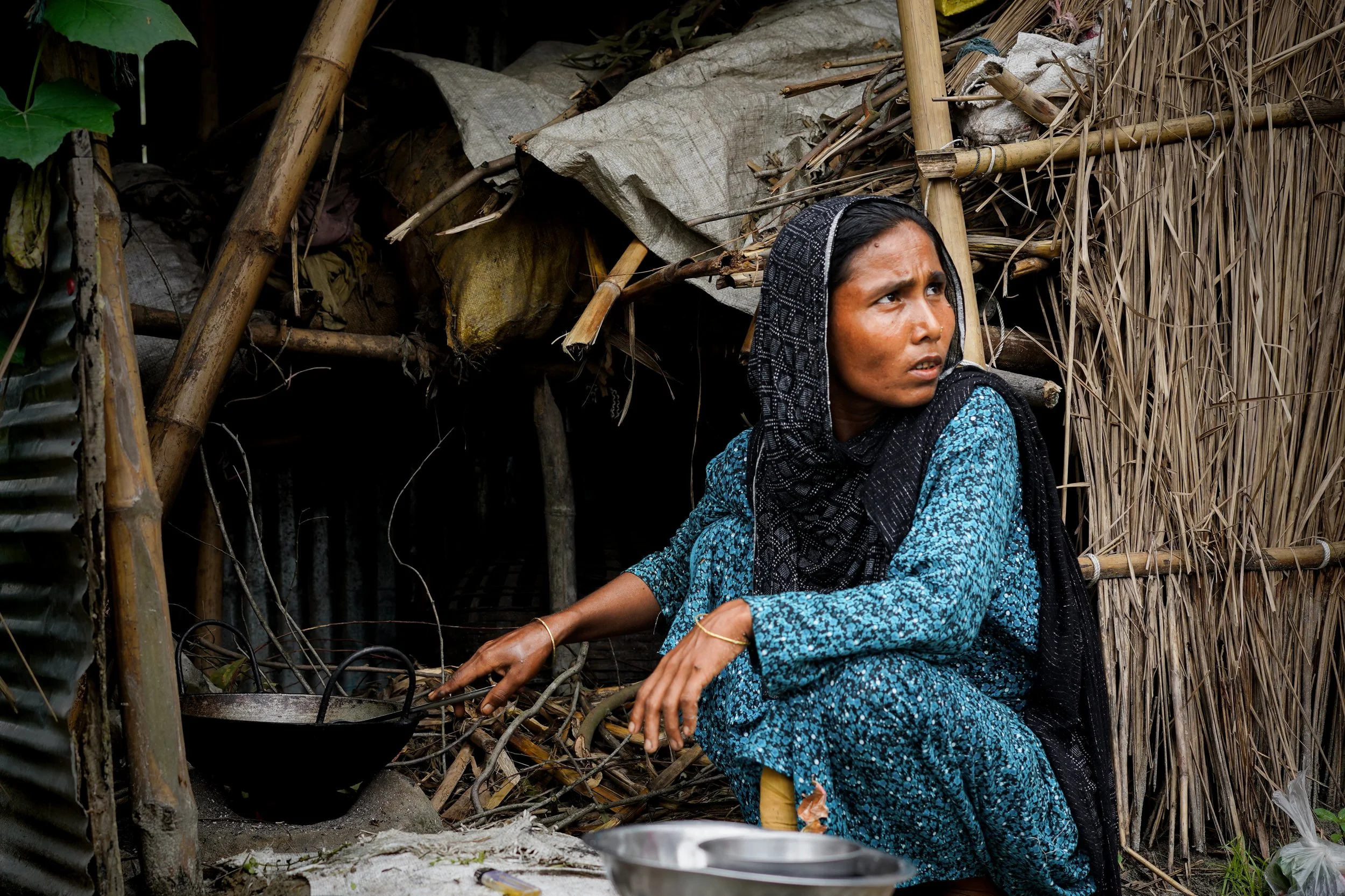
Every photograph a charity publishes makes an argument about the person in it. It says who they are, what they’re capable of, and what they need from you. For decades, our sector has made the same argument over and over: here is someone poor, they’re waiting for your help.
We don't accept that argument, because it isn't true. The women we work with design, finance and build their own homes. They run savings groups, train as builders and are improving their homes and communities without fanfare. A camera that only looks for hardship misses all of that. A story that only describes the need leaves the audience knowing less than when they started.
What is ethical storytelling?
It’s the sharing of real life experiences with care, respect and consent. It considers what we say, how we share these stories, and what it means for the people in it once it’s out in the world.
In practice, we hold ourselves to six things:
Start by asking why. Who is this story for, what do we want it to change, and are we the right people to tell it?
Consent is a conversation, not a signature. People hear, in their own language, where their story will go, who might see it and what the risks are. They decide whether and how they're named, and they can always change their mind.
People are the experts on their own lives. Their version of events stands.
Tell the whole story. Not pity, and not a hero's tale either. As Chimamanda Ngozi Adichie said, the problem with stereotypes is “not that they are untrue, but that they are incomplete”.
Do no harm, even if it means saying nothing. If a story can't be told safely and honestly, we don't tell it.
Stories return home. Where possible, photographs and stories are given back to the people in them.
Underneath all these sits one question: how would I feel if this story were told about me?
We teach ethical storytelling on Designing with dignity, our course in humanitarian architecture run in partnership with Nirapod Bangladesh Songstha. Participants are set the task to tell a story of someone they meet during the course that inspires them, with that person's consent, and focus on what they're achieving. The printed stories and photos are presented back to the people in them.
Behind the lens: Ananna and Arif
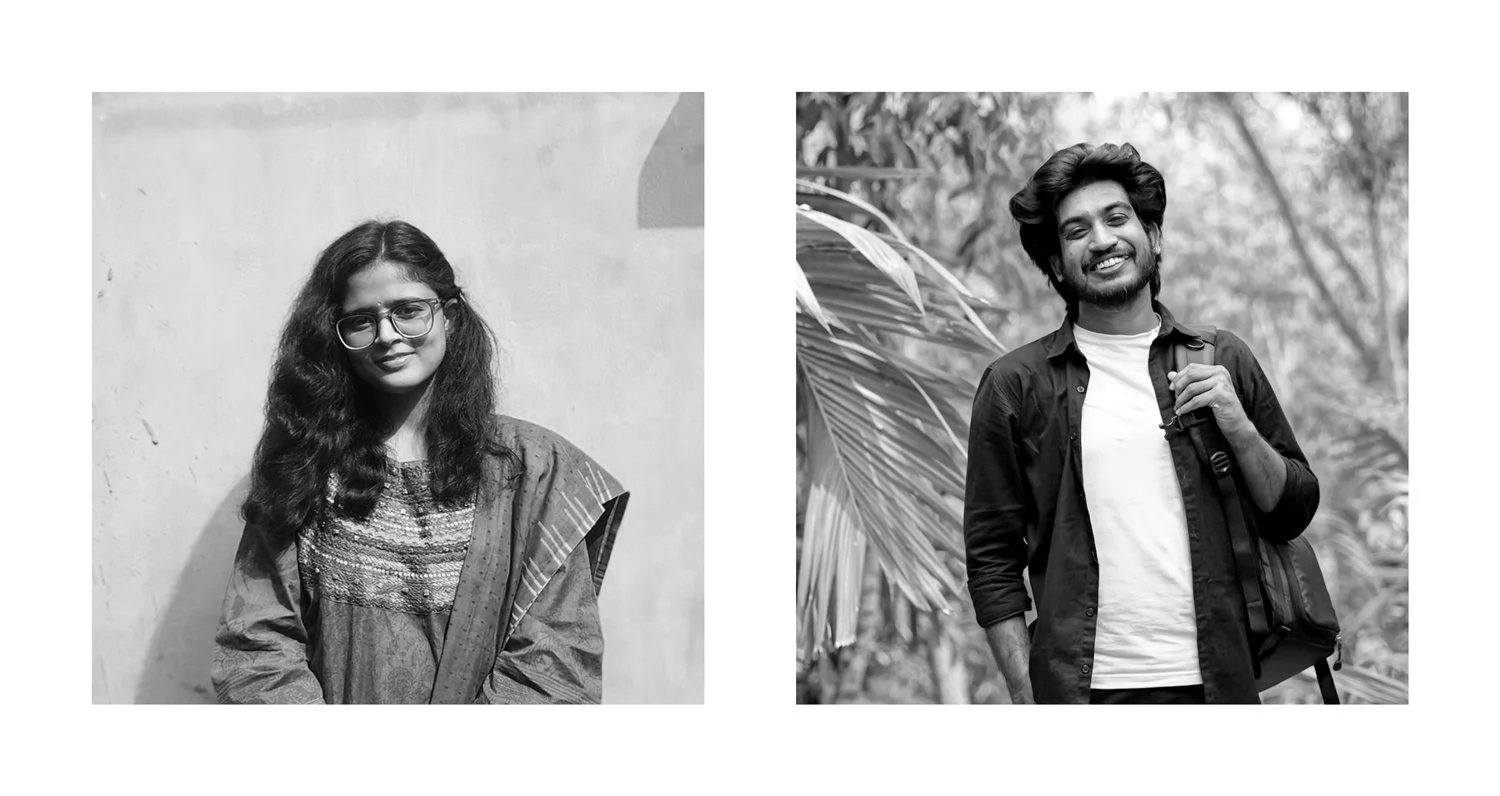
Who holds the camera matters. A photographer flown in for a week sees a place differently from someone who knows it, and the people being photographed know the difference too.
On the banks of the Teesta, local photographers (and architecture students) Ananna and Arif spent time with our team, and riverside communities, to understand the challenges they face, how they live alongside such a volatile river, their hopes and dreams.
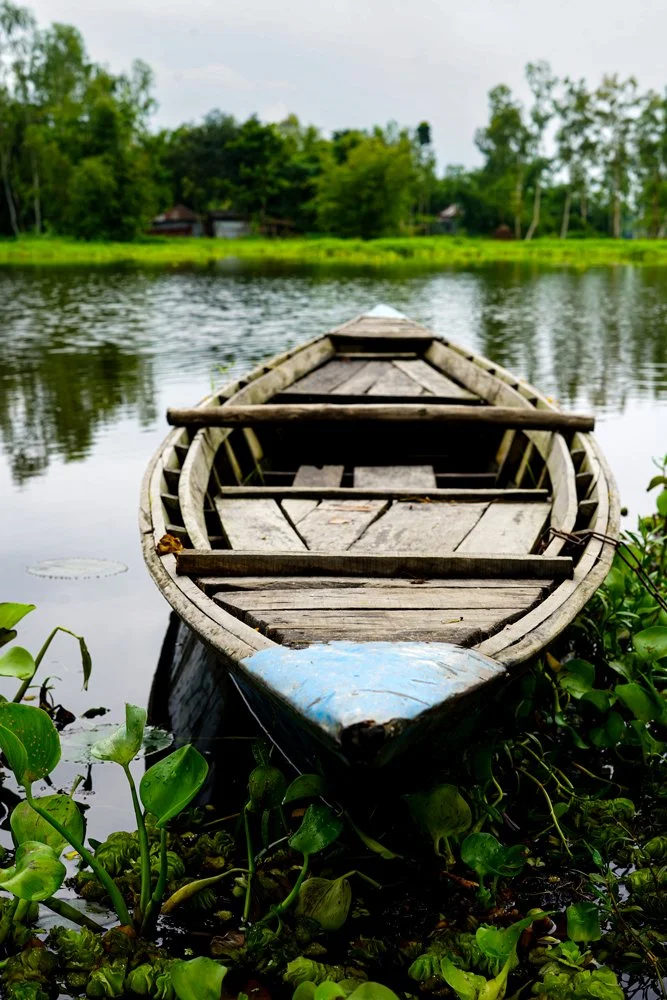
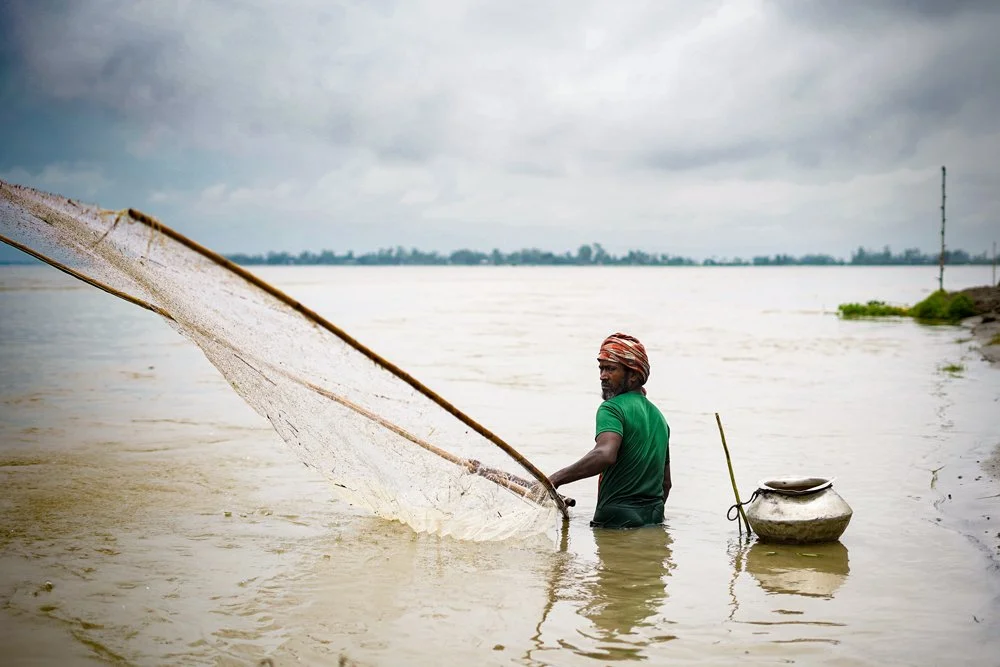
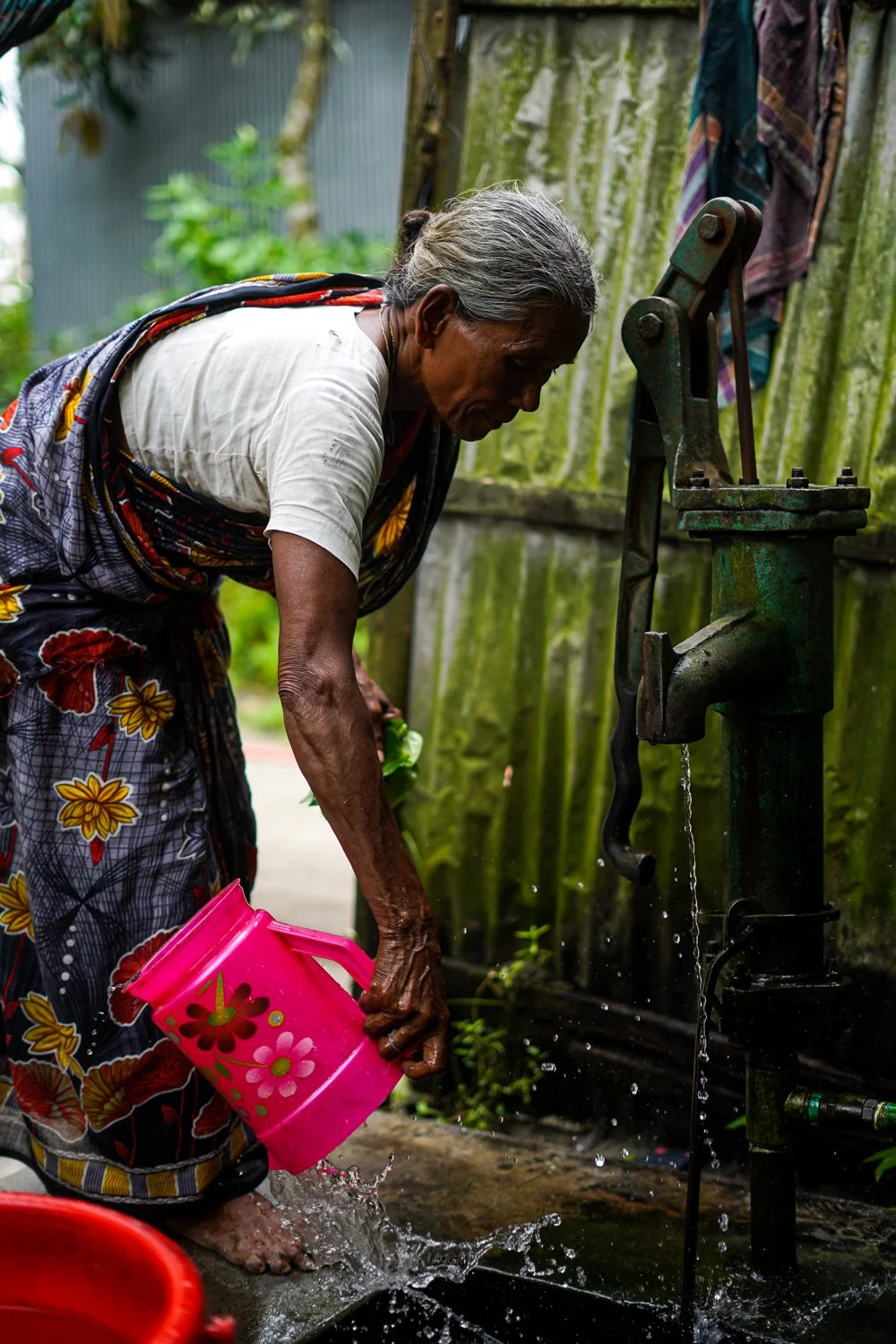
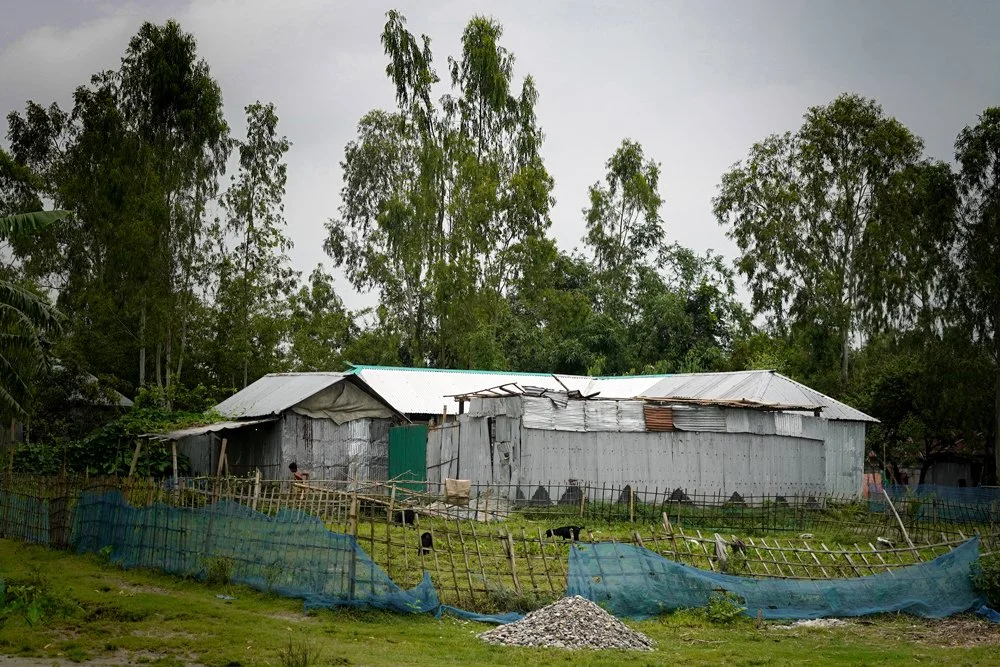
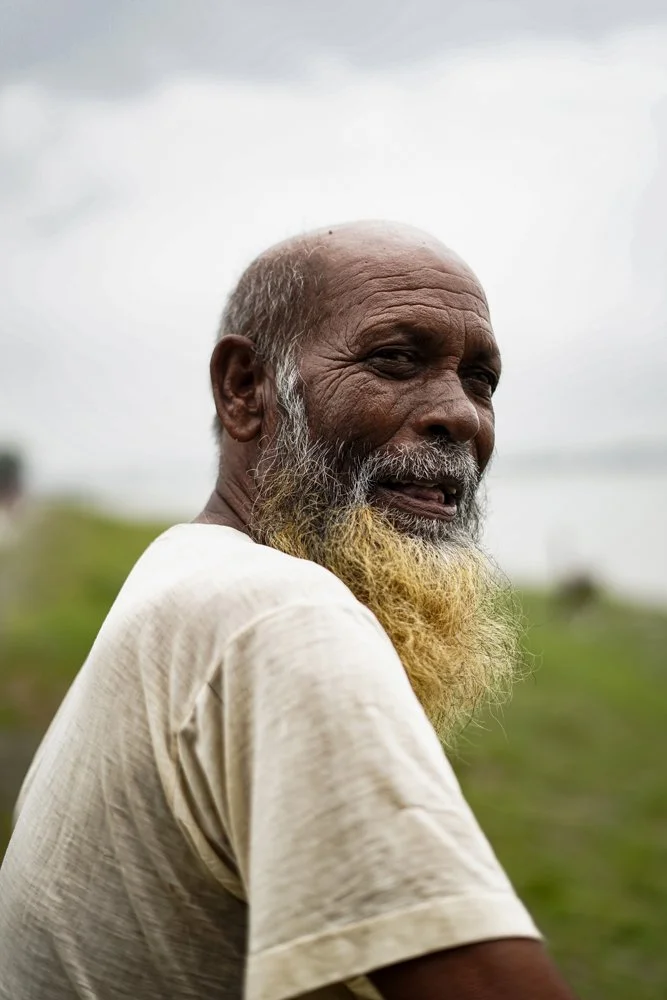
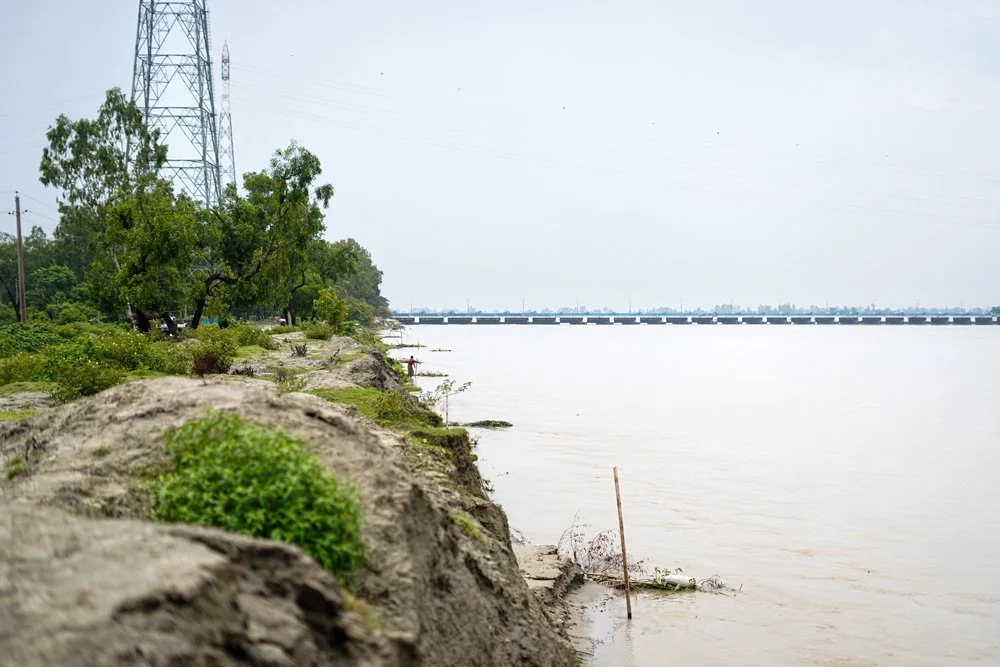
We asked them how they approach their photography responsibility:
Ananna: a more complete and honest story
For Ananna, photography carries a responsibility that goes beyond recording what's in front of her. “The way we frame a person, choose a moment, and tell a story can influence how others perceive them”, she says.
She is clear that this doesn't mean making everything look rosy.
“Photographing with empowerment in mind does not mean ignoring difficulties or presenting an unrealistically positive picture. It means telling a more complete and honest story, one in which people are seen as active participants in their own lives rather than passive recipients of help.”

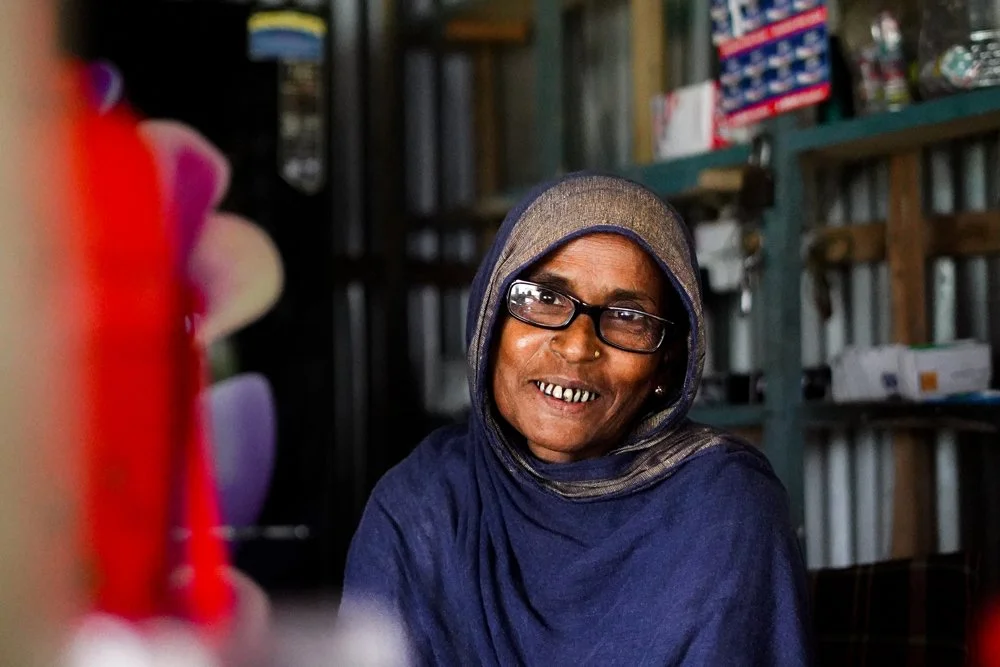
One of her photographs shows a woman working carefully on a bright piece of fabric outside her home. “What stays with me most is the woman herself and the dignity of her everyday labour”, Ananna says. “The image invites viewers to notice her skill, effort, and individuality.”
The work with AzuKo and Nirapod has changed how she sees her own country, and her role in it. “It has made me deeply accountable for the position I hold behind the lens... Every photograph is a choice.”
Arif: see a person, not a problem
Arif's method starts with patience. “I usually watch first, staying a little to the side and letting a scene settle”, he says. “I wait for a moment when light, expression and movement meet, instead of asking someone to pose as a symbol of hardship.”
What he finds when he waits is the stuff a quick glance misses.
“A woman might stitch while keeping an eye on several children. Women pool small savings or share tools so no one is left without. Someone adapts her home or stall for flooding, heat or limited space... These things are not done for an audience. They are part of how people keep life going for one another.”
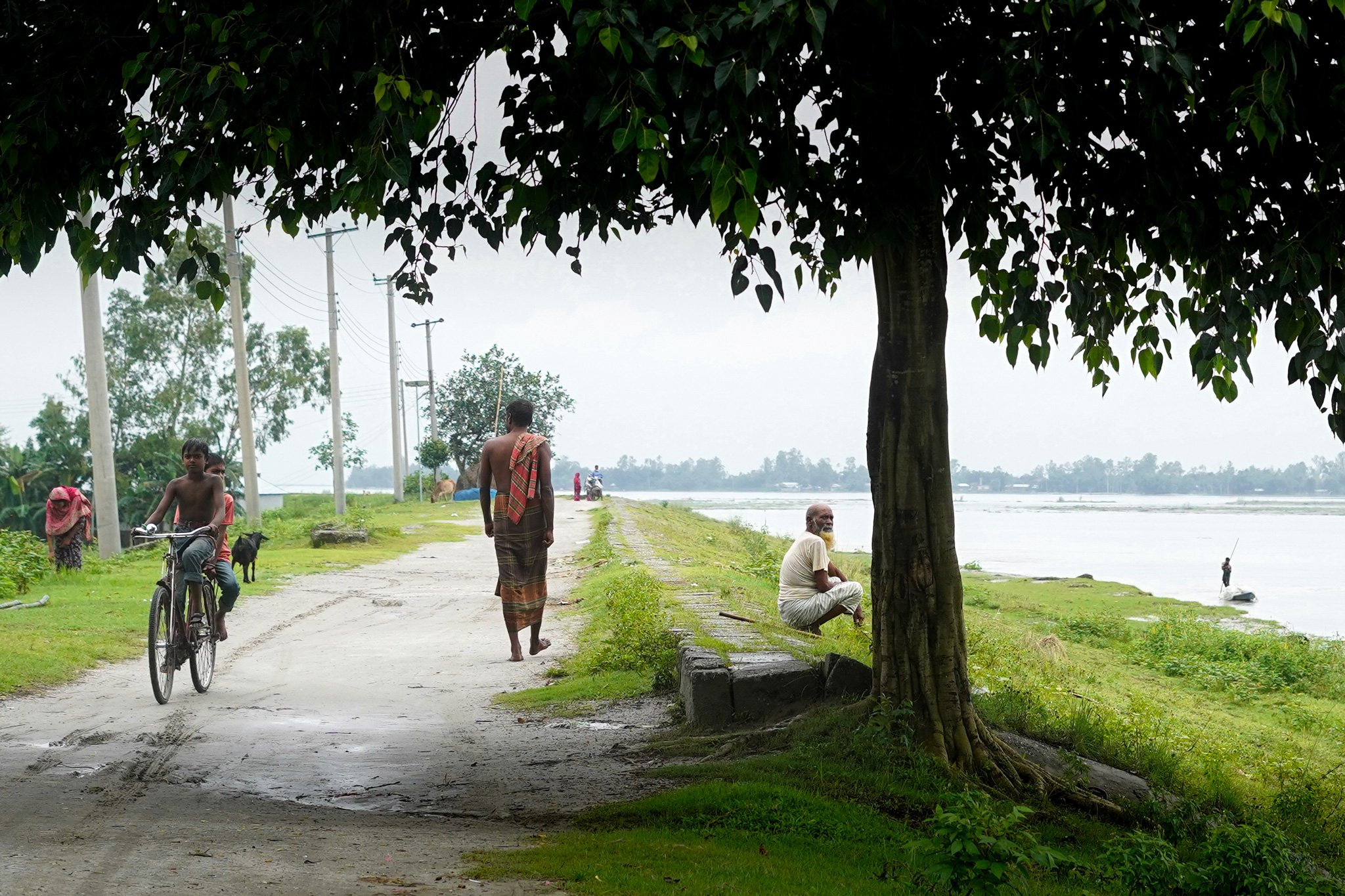
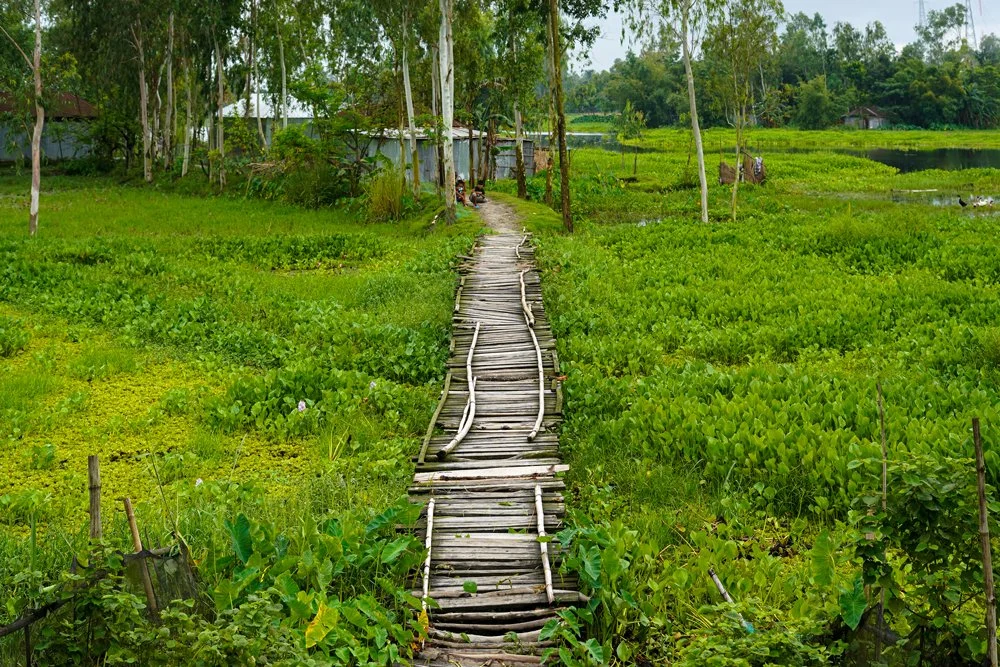
He titled one of his Teesta photographs ‘Still Here’. Two children ride off, a young man walks his own path, and an older man sits by the river. “Three ages and three different journeys share the same landscape”, he says. “Generations change, but the stories of life and nature continue.”
His hope for anyone who sees his work is simple: “I want people to look at my photographs and see a person, not a problem.”
Beyond the photograph
Ananna and Arif noticed what we see every day. Women are already adapting their homes, pooling their money and looking out for their neighbours. Our work starts from that strength, and we can't build with women as equals and then describe them as helpless. If our programmes and our storytelling don't match, one of them isn't honest.
Ethical storytelling doesn’t stop at the image. It shapes how we write, report and share what we learn:
We name the causes. Housing poverty isn't a natural state or a personal failing. It comes from who owns land, who can borrow money and who bears the brunt of a changing climate. A story that shows a damaged home without saying why leaves readers thinking that's simply how things are.
We're not the hero. We don't design for communities. We design with them, and the same goes for telling their stories. That's why we call the women we work with Homemakers: people who design, finance and build, not people who wait to be housed. We ask supporters to stand with them.
We credit what we learn. Much of what we know about building for floods, heat or overcrowded spaces comes from the women, and communities, themselves. When we share those insights with others, we credit them.
We report honestly. We understand donors want numbers, and we give them. But a figure next to a photo of someone looking desperate tells a story we don't believe. We show the work as it is: skilled, creative, collective, with the setbacks included.
This takes longer. Getting consent properly, going back with photos and checking a stories accuracy and context all take time and money that our small team feels. We think it's worth it, because the alternative costs the people in the stories far more.
Learning to see
Ananna put it best: “Photography is as much about learning to see as it is about learning to take pictures.” That's true for anyone who tells stories about other people's lives, whether they're a charity, a journalist, or a volunteer. It is a deep responsibility.
Next time you see a photo or read an article from a charity, including ours, ask whose story it is and who chose how it was told. Ask whether the person in it would recognise themselves. Ask yourself, what have you learned about their humanity.
As Arif says, “If we keep looking only for problems, that may be all we ever see.”
FURTHER READING
A practical guide for communicating global justice and solidarity: An alternative to the language of development, aid and charity (Health Poverty Action)
From contributors to co-producers: A guide to participatory production & Shifting the power: A toolkit for journalists and communicators (On Our Radar)
How to communicate the world: A social media guide for volunteers and travelers (RADI-AID)
Narrative change: Why ethical storytelling matters (Devex, with Moky Makura of Africa No Filter)
Putting the people in the pictures first: Guidelines for the ethical production and use of content (images and stories) (Bond)
The price we pay for the money we raise: Effects of international development fundraising on British public attitudes & engagement (Development Engagement Lab)